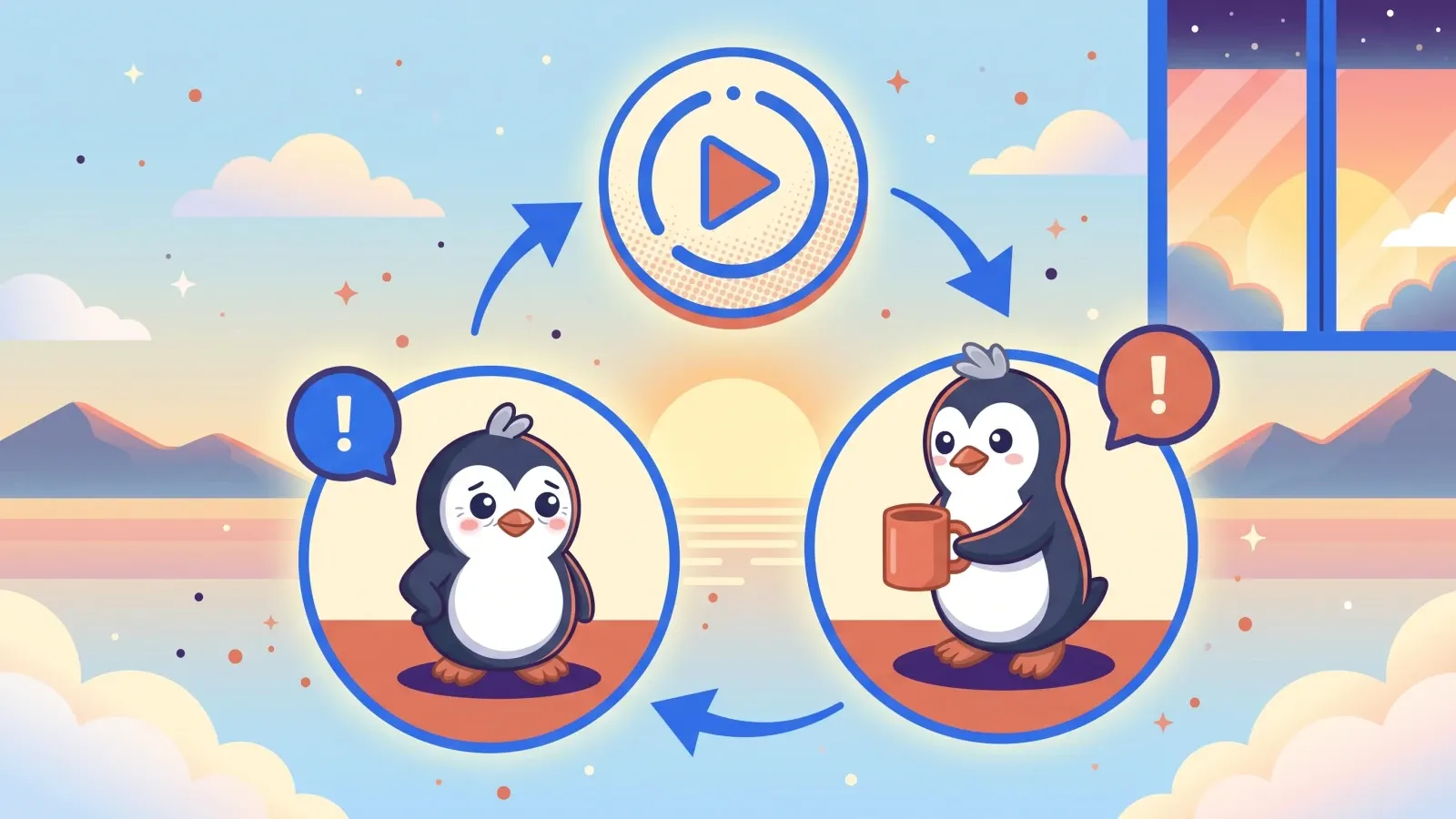




Na 11pm. You dey brush your teeth and di conversation wey you get three hours ago start to run again, full sound, full picture. Di tin wey you talk too fast. Di pause wia you laugh too long. Di exact wording of di reply wey you wish say you for use instead. Di loop no dey ask permission. E just dey start.
Dis pattern get name. Researchers dey call am post-event rumination, or post-event processing for di older clinical literature: di brain dey review social interaction in detail afta e don finish, dey look for wetin e fit don miss. E no be defect, e no be personality trait, and e no be sign say someting dey wrong wit you. Na di brain dey do one of im oldest work inside context wey e no fit quite finish.
Di loop dey come for different shapes. Di moves wey dey help dey depend on which one you dey run. Notin here need you to force di thought comot or force yourself calm. Di replay fit train, di way muscle fit train, and dat na useful news to start wit.
If na here you first land, browse di Quippy blog for more on di conversations wey dey keep replay.
Why you dey replay conversation for your head
Di short version na say di brain dey treat social exchange wey no clear di same way e dey treat problem wey never solve. Someting happen, di outcome no sure, and di system dey run until e find resolution. Conversation full of unclear outcomes by design. Tone dey partial. Body language dey partial. Di oda person mood you no fit see. So di brain dey reach for di only data wey e get, wey be di recording wey e just make, and e dey replay.
Di drive wey dey under dat replay old pass language. Researchers dey describe rumination as di mind attempt to soothe imself for di only way wey e sabi: by re-analysing, by scanning for threat, by trying to pull certainty comot from moment wey don pass. Psych Central tok am directly: for some pipo, ruminating thoughts na way to control anxiety. Di loop no be wicked tin. Na coping move wey overstay im welcome.
Most pipo dey run on mix of several engines at once. Wen conversation end witout resolution, di brain dey instinctively replay am (Psychology Today on why we dey replay conversation) as e dey desperate to find di meaning wey go allow you close di file. To review di exchange dey feel productive bicos e for really be productive, if only say di past still dey open for editing. And di brain fit don notice someting wey register as risky, small change for tone or flicker for face, and now e dey read di page again dey look for danger wey e no fit locate well.
Clinically dis one matter bicos di loop dey involved for maintaining social anxiety as time dey go. One 2024 systematic review and meta-analysis pool across studies and dem find moderate connection between post-event rumination and social anxiety symptoms (post-event rumination and social anxiety, systematic review), effect wey hold across di whole anxiety spectrum, no be only for clinical samples. Di American Psychiatric Association tok say di repetitive, negative side of rumination fit contribute to how depression or anxiety dey develop, and e fit make conditions wey already dey worse. Di loop no just dey uncomfortable; if you leave am dey run, e get cost wey you fit measure.
None of dis mean say you spoil wen di tape start. E mean say di system dey do wetin dem build am to do and nobody don teach am say dis particular work no dey finish. Wey be good news, bicos skill wey di system fit learn, di system fit also unlearn.
Wetin di replay really be
Most articles dey treat replay like say na one single tin. E no be. Di loop dey show face differently depending on wen e hit, and to name di shape matter bicos di move wey dey help dey change wit am.

Di night replay. External stimulation drop, your phone go down, di room quiet, and di loop arrive bicos di brain finally get bandwidth to handle am. Na dis one dey most common. Na also am dey tire pesin most, bicos e dey chop sleep and recovery wey you no fit get back.
Di cringe attack. You dey waka go kitchen and one memory from years wey don pass just drop, full body. Chest tight, small head-shake wey you dey do witout meaning to. Pipo don define cringe attack for writing as intense physical or emotional experience wey connect to past memory wey dey cause shame, distress, or social anxiety. Di tin wey you talk for eighth grade, di call wey you no suppose make, di joke wey land wrong for party wey you never go for six years. Cringe attack dey show di brain negativity bias clearly: we dey hyper-focus on tins wey we spoil, den we lose perspective on all di tins wey we dey do well.
Pre-event rehearsal. Di exchange never happen. You dey run one version wey you imagine forward, den you dey revise am, den you dey run di revision, den you dey revise again, wit no clear off-switch until di real conversation start. Dis na di loop dey run backwards, and e dey share di same architecture wit di post-event version.
Di post-text spiral. You write message, you send am, and now di silence between your message and di reply dey do wetin di conversation bin dey do. You dey read wetin you write again. You dey put tone wey you no put inside am. You dey generate worst-case meaning for di person quietness. Dis one dey run faster pass di odas bicos di source material dey right there for screen.
Di brain dey treat each of dem like crime scene wey e must examine again. Night replay need sensory interrupt. Cringe attack need self-compassion move. Pre-event rehearsal need horizon wey you set. Post-text spiral often need make phone dey anoda room.
Wetin really dey help wen di loop start
Di move no be to fight di thought. To try no tink someting na di surest way to continue to tink am; di brain no get clean delete key. You need to do someting specific wey go interrupt di cycle long enough make di next thought different.
Name di loop. Out loud if you fit, for your head if you no fit. Someting like, dis na rumination, or, di tape dey run again. Di labelling step small and e dey feel silly di first time wey you try am, but e dey do real work: e dey turn automatic process to process wey you notice. You no dey inside di loop again; you be pesin wey dey watch imself dey inside di loop. Dat distance na wetin self-distancing research don dey point at for years. Di same effect dey show under di looser label “observe di thought, no fuse wit am.”
Change wetin your body dey do. Harvard Health Publishing first-line list for rumination concrete and e no dey flashy: find distraction, change location, rely on relaxation techniques like mindfulness and deep breathing, tok to friend, take small action. Harvard framing direct: you no go too ruminate if you dey busy dey do someting else, and to change wetin your body dey do dey change wetin your attention fit reach. If di loop dey run for 11pm for bathroom, you go waka go kitchen go pour water. If e dey run for your car, you go put podcast wey you no need to tink about. Di move no be to tink yourself comot from am. Na to move yourself comot from am. Di full Harvard Health list worth to read if you dey build your own kit (Harvard Health on how to break di rumination cycle).
Ground yourself through your senses. Di 5-4-3-2-1 exercise na di grounding script wey pipo sabi most: name five tins wey you fit see, four wey you fit touch, three wey you fit hear, two wey you fit smell, one wey you fit taste. Or use di shorter 3-3-3 version if na dat one you fit manage. Grounding dey work bicos e dey borrow di body to anchor attention. By shifting your attention from thoughts wey dey disturb you go di here and now, dis exercises dey give quick relief from anxiety. Di 5-4-3-2-1 easy to carry anywia, e dey take ninety seconds, and e no need any equipment. E dey interrupt di loop witout to try beat am for im own ground.
Use window wey you schedule. If di loop dey show face every day, fight less and contain more. Pick fifteen-minute window early for evening, sidon wit di thought on purpose, write down wetin di brain wan make you consider, den close di notebook. Di idea na say worry-time don show say e dey reduce intrusive thoughts for oda times of di day, bicos di brain no dey fear again say e go lose di content. You don move di file from urgent go scheduled, and di brain don stop to protest di move.
Commit to small action wen you fit. If di replay dey run on real conversation wey leave someting unresolved, di cleanest interrupt na action: send di apology wey you dey keep draft, write di note wey you dey keep rewrite, schedule di follow-up wey you dey keep plan. Di loop dey continue wen di brain see task wey never finish. Sometimes to finish di task for real life, even if e no perfect, dey more useful pass to perfect am inside your head.
-
Di instinct: Replay di conversation again
Di move: Name di loop out loud den change location
-
Di instinct: Dey search for wetin you for talk
Di move: Run one 5-4-3-2-1 grounding pass
-
Di instinct: Promise yourself say you no go tink about am
Di move: Schedule fifteen-minute window early for evening
-
Di instinct: Dey beat yourself up for 11pm
Di move: Send di message or write di note for morning instead
None of dis moves need you to feel calm. Dem need you to take small, specific action wen di loop start. Social skill na muscle, e no be personality. Di loop na habit wey your nervous system learn. You fit teach am different habit through reps.

Wen di replay need pass self-help
No be every replay be problem wey you need solve. Di frame to keep for mind: reflection dey produce next step, rumination dey feed imself. Single, short review of conversation wey end wit small action, like to send follow-up text or note someting wey you go handle differently next time, no be rumination. Na reflection, and e dey do useful work. Even Psych Central separate di two: for rumination, we dey continue to obsess over di negative witout working towards resolution or way forward. If your replay produce action den e stop, e dey do im work.
Di pattern wey worth to watch na wen di loop dey run witout producing any next step, wen e dey chop hours of your day or your sleep, wen di replay start to spill enter avoidance, wen you stop to accept invitation bicos you no fit face di post-event review wey go come later. Na di loop dey maintain imself be dat, and self-help moves alone fit no reach. Therapies wey evidence support for rumination, including rumination-focused cognitive behavioral therapy, dey target di habit directly: identify triggers, recognise di ruminative response wen e start, and practice replacing am wit thinking wey dey concrete and dey face action. E get structure, e get time limit, and e dey work.
Therapist fit help wia self-help often dey plateau. Dem fit help you identify di metacognitive belief wey dey under your own particular loop, di quiet conviction say to ruminate dey protect you somehow or say to stop am go be careless. Dem fit pace your exposure to di situations wey dey trigger replay so dat your system go get new evidence to update wit. And dem fit work wit you on di broader pattern, social anxiety or depression or di two, wey di loop dey often be symptom of instead of di sickness itself. None of dat na sign say you dey do dis tin wrong. Na how di loop dey look wen e cross threshold (PsychCentral on rumination and replay).
E never too late. Di brain wey you get for thirty-five dey learn di same way wey di brain wey you get for twenty-five bin dey learn. Di replay wey you don dey run for years fit quiet down within one month, and e fit soft well well within three. E need reps, e no need willpower. Next time wey di tape start for 11pm, di move small: name am, waka go anoda place, do di sensory pass, den sleep. Di loop go run again. You too go run.